- This event has passed.
Event Navigation
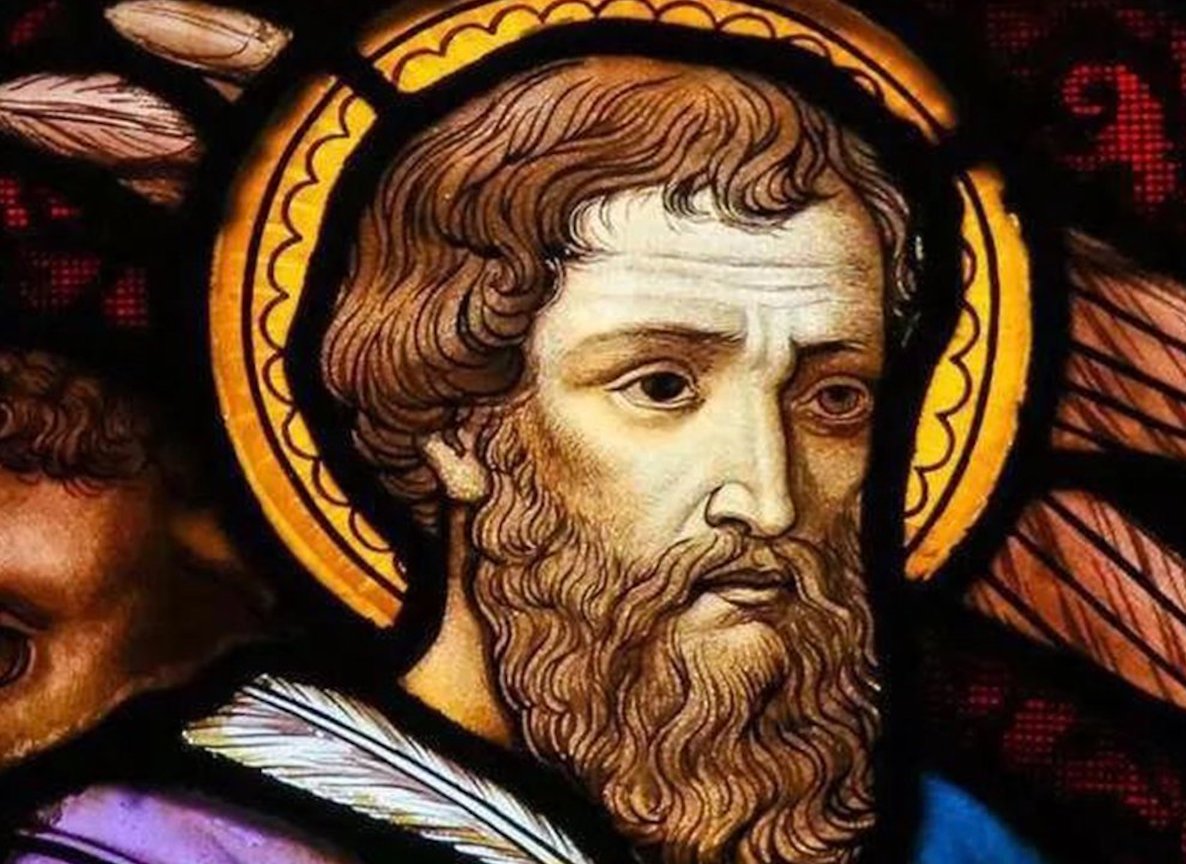
Every October 18 the Church celebrates Saint Luke the Evangelist, author of the third of the Gospels and the Acts of the Apostles.
To know and love Mary
Thanks to Luke's account of the life of Jesus, captured in his Gospel, Christians can better know the Virgin Mary, the Mother of God.
Saint Luke recorded many more passages from the life of Mary than any of the other evangelists. This may be due to his closeness to the Apostle Saint John, the beloved disciple, who took charge of the Mother of God at the request of Jesus himself, made explicit while he was dying on the Cross (Jn 19, 27).
Doctor of bodies and souls
Saint Luke's date of birth is uncertain, although there is more consensus on where he was born, Antioch. Your name, Loukas, refers to a region that is now part of Italy, Lucania, and seems to be related to the Greek term Leukos, which means 'white' or 'luminous'. He converted to faith in Jesus Christ around the year 40 and it is known that he did not know the Lord personally, but he did know Saint Paul, of whom he was a disciple.
Luke was an educated man, unlike most of the Apostles, and of extensive culture. It is said that he was a doctor and knew some arts such as painting; His mother tongue was Greek.
In his Gospel, Saint Luke highlights those who suffer in body or soul, especially the poor and repentant sinners. Furthermore, it constantly reminds us of the need for prayer.
Bearer of Good News to the Gentiles
Luke is the only author of the New Testament who was not of Jewish origin and whose writings were designed to bring the Good News to Gentile peoples. In fact, he used Greek “koine”, that is, the most widespread variant of the Greek language of antiquity, along with Latin.
According to tradition, Luke would have preached in Macedonia, Achaia, Galatia and Boeotia.
Regarding their final destiny, which occurred after the death of Peter and Paul, there is not enough certainty. It is debated whether he died as a martyr or whether, according to Prefatio vel argumentum Lucae (Preface or defense of Luke), died as an old man. There is, on the other hand, a tradition based on Gaudentius (PL 20, 962) according to which Luke would have been martyred alongside Andrew, the Apostle, in the land of Patras, Roman province of Achaia. According to this same tradition, he would have died hanging from a tree.
The bull or ox
Generally, Lucas is represented with a book in his hands, next to a bull or bull. The figure of the bull or ox is inspired by a passage from the book of Ezekiel (Ez 1:10), as well as another taken from the book of Revelation. In both cases, reference is made to four living beings that are in the presence of God. In the case of the Revelation passage, 'the four' are before the throne of the Lamb.
Tradition has identified these four beings with the four evangelists (Tetramorphs), one of which is shaped like a bull or calf (Rev 4:6-7).
Saint Luke is the patron saint of doctors, surgeons, butchers, bookbinders, sculptors, notaries and artists, due - the latter - to the fact that he probably painted an image of the Virgin Mary.